
Reducing diesel consumption is one of the most common objectives across commercial and industrial energy infrastructure in emerging power markets. Rising fuel costs, generator maintenance exposure, and sustainability targets have driven increased interest in solar PV and hybrid power solutions.
However, many diesel-reduction projects fail to deliver expected performance improvements. In most cases, this is not because renewable generation potential is insufficient. The issue instead lies in how generator-dependent systems are originally configured and subsequently analysed.
Where the Problem Starts
Generator-supported facilities often evolve incrementally rather than through structured engineering design. Additional machines are installed over time to respond to load growth, reliability concerns, or grid instability without revisiting the underlying dispatch architecture.
Typical weaknesses include:
• Generators operating below optimal loading thresholds
• Parallel generator operation without sequencing logic
• Absence of priority load segregation
• Limited visibility of runtime distribution across generator sets
• Static switching arrangements between grid and generator supply
Solar capacity is then introduced into systems that were never optimised for coordinated hybrid operation. Under these conditions, renewable penetration becomes constrained by generator behaviour rather than by available solar resource.
Why This Matters Technically
Generator efficiency varies significantly with loading conditions. Operation at low loading levels increases:
• Fuel consumption per unit energy produced
• Engine wear rates
• Maintenance frequency
• Operating instability
• Lifecycle cost exposure
Without restructuring generator dispatch logic, solar generation cannot displace diesel operation effectively. Instead, generators continue running to maintain minimum load thresholds required for stable operation. This reduces achievable savings even where solar capacity is technically sufficient.
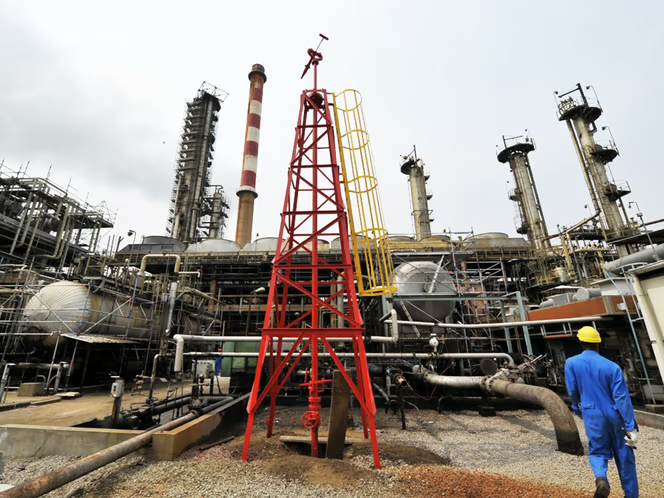
The Gap Between Installed Capacity and Operational Performance Across many facilities, installed generation capacity significantly exceeds actual operating demand for most of the day. For example:
• Generator sets sized for peak demand operate continuously at partial load
• Daytime solar production coincides with already underloaded generators
• Critical loads are not separated from non-critical loads
• System transitions are designed for contingency rather than optimisation
As a result, hybrid integration becomes constrained by legacy operating philosophy rather than engineering potential. Practical Engineering Implications The consequences of incomplete generator optimisation include:
• Lower-than-expected diesel savings after solar installation
• Reduced renewable utilisation ratios
• Unnecessary generator runtime during daylight hours
• Inefficient maintenance scheduling
• Extended payback periods for hybrid investments
For asset owners and operators, this affects both operating cost predictability and confidence in hybrid system strategies.
A More Robust Approach
Improving diesel-reduction performance begins with restructuring system architecture rather than simply increasing renewable capacity. A structured engineering approach typically includes:
• Analysis of generator runtime distribution
• Identification of minimum loading constraints
• Segregation of critical and discretionary loads
• Evaluation of dispatch sequencing logic
• Integration of storage-supported transition smoothing
Once these factors are addressed, solar generation can operate as an active optimisation resource rather than a passive supplementary source.
Conclusion
Diesel reduction strategies rarely fail because of insufficient solar potential. They fail when generator behaviour is not properly understood before hybrid integration begins. Improving generator dispatch architecture is often the most effective first step toward reducing operating cost exposure across generator-dependent facilities.